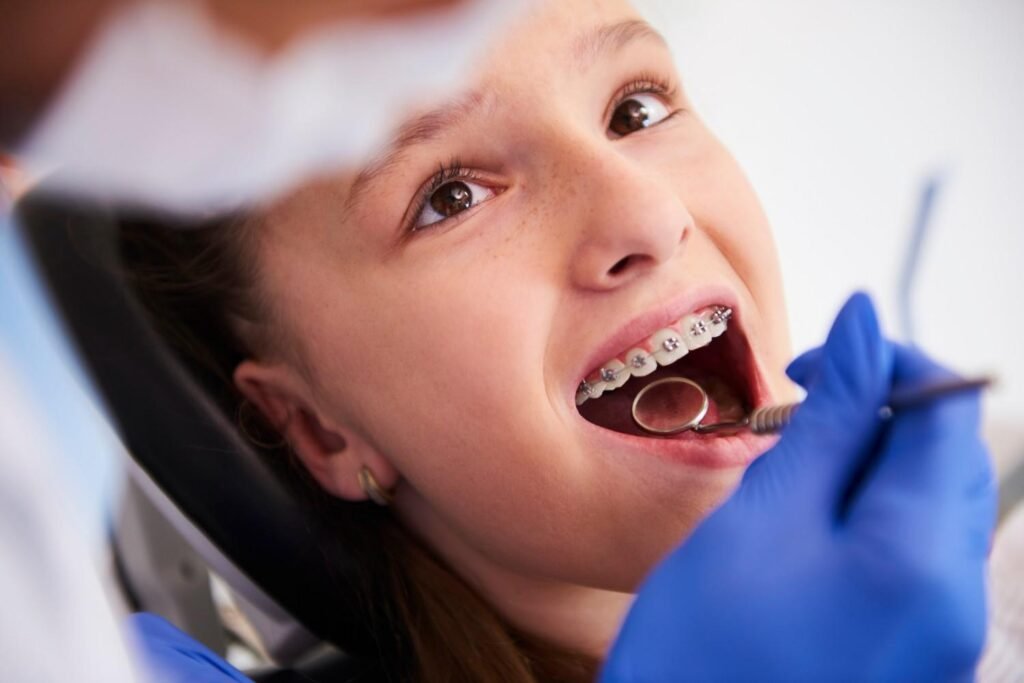
Properly aligned teeth support comfortable chewing, clear speech, easier cleaning, and a balanced smile. When teeth are crowded, rotated, spaced incorrectly, or the upper and lower jaws do not meet properly, orthodontic treatment may be recommended. The Best Orthodontic Braces Clinic in Delhi begins with a detailed assessment before suggesting braces or another orthodontic option. At Sarita Sublok Multispeciality Dental Hospital, orthodontic care is described as personalized, with options including metal braces, ceramic braces, lingual braces, and clear aligners.
An orthodontic assessment is not only about appearance. It also examines how the teeth fit together and how the bite functions. A careful evaluation helps the dental team understand the problem and select a suitable treatment approach.
For fast information, contact us on WhatsApp.
What Is Teeth Alignment?
Teeth alignment refers to the position of the teeth within the dental arches.
Ideally, teeth should have enough space to sit in appropriate positions. However, several factors can affect alignment. These include genetics, jaw development, early loss of primary teeth, oral habits, and other dental conditions.
Common alignment problems include:
- Crowded teeth
- Crooked teeth
- Gaps between teeth
- Rotated teeth
- Protruding teeth
- Teeth that are positioned too far inward or outward
The Best Orthodontic Braces Clinic in Delhi can assess these concerns and determine whether orthodontic treatment may improve alignment and function.
Understanding Bite Problems
A bite describes how the upper and lower teeth meet when the mouth closes.
A healthy bite allows the teeth to work together efficiently. However, some patients develop malocclusion, which means the teeth or jaws do not meet in an ideal relationship.
Common bite problems include:
- Overbite
- Underbite
- Crossbite
- Open bite
- Deep bite
- Excessive spacing or crowding
These ailments can range in severity from minor to severe.
The severity of the issue and whether it is primarily related to tooth position, jaw development, or both can be ascertained with the use of an orthodontic evaluation.
Initial Orthodontic Consultation
The assessment usually begins with a consultation.
The orthodontic team discusses the patient’s concerns and asks about dental history. They may want to know when the alignment problem was noticed and whether the patient has received orthodontic treatment before.
For children and teenagers, information about dental development can also be important.
The dentist may ask about:
- Previous dental treatment
- Tooth extractions
- Oral habits
- Jaw discomfort
- Difficulty chewing
- Family history of orthodontic problems
- Previous braces or aligners
This information provides useful background before the clinical examination begins.
Examining the Teeth and Gums
The next step involves examining the teeth and surrounding oral tissues.
The dentist looks at the position of individual teeth and checks for signs of crowding, spacing, rotation, or unusual eruption.
The gums and overall oral health are also important.
Active cavities or gum problems may need to be treated before orthodontic treatment begins. Healthy teeth and gums provide a better foundation for orthodontic care.
The Best Orthodontic Braces Clinic in Delhi should therefore consider overall oral health instead of focusing only on tooth alignment.
Assessing the Upper and Lower Jaw Relationship
Orthodontic treatment also involves evaluating the relationship between the upper and lower jaws.
A patient may have well-aligned individual teeth but still experience a bite problem because of the way the jaws relate to each other.
The dentist may evaluate:
- Jaw position
- Facial symmetry
- Chin position
- Profile
- Width of the dental arches
- Relationship between upper and lower teeth
This assessment is especially important in children because jaw growth is still developing.
Checking for Crowding and Spacing
When there is not enough room for teeth to fit correctly, crowding happens.
Teeth may rotate, overlap, or become challenging to clean as a result.
Spacing is the opposite problem. It occurs when there are noticeable gaps between teeth.
Both conditions can have several causes.
An orthodontist evaluates the available space and considers factors such as tooth size, jaw size, missing teeth, and dental development.
The goal is to understand why the spacing or crowding exists before deciding how it should be corrected.
Evaluating Overbite and Underbite
When the upper and lower front teeth overlap too much, it’s called an overbite.
When the lower front teeth protrude past the higher front teeth, this is known as an underbite.
Both conditions can affect the appearance and function of the bite.
Their severity varies between patients.
Braces or other orthodontic appliances may help correct some cases. More complex jaw-related problems may require additional assessment.
A personalized examination is therefore necessary before choosing a treatment.
Checking for Crossbite and Open Bite
When one or more upper teeth bite within the matching lower teeth, this is known as a crossbite.
An open bite occurs when certain upper and lower teeth do not meet when the mouth is closed.
These conditions can affect chewing and may contribute to uneven forces on the teeth.
Early assessment can be particularly helpful for children because growth and dental development may influence treatment options.
Adults can also receive orthodontic care, although treatment planning may differ because jaw growth is complete.
Use of Dental X-Rays and Diagnostic Records
Clinical examination may be supported by diagnostic records.
Depending on the patient’s needs, the orthodontic team may recommend dental X-rays or other imaging.
These records can provide information about:
- Tooth roots
- Impacted teeth
- Developing permanent teeth
- Jaw structure
- Bone levels
- Tooth positioning
Additional photographs or digital scans may also be useful when planning orthodontic treatment.
Not every patient requires the same diagnostic tests. The dentist selects investigations according to the individual’s condition.
Digital Scanning and Treatment Planning
Modern orthodontic care may use digital technology to support treatment planning.
Digital scans can provide detailed information about the teeth and dental arches. They may also help the dental team monitor changes during treatment.
Sarita Sublok Multispeciality Dental Hospital states that it uses modern technology and diagnostic systems as part of its orthodontic care.
Technology can support clinical decision-making, but the final treatment plan should still be based on a professional assessment.
Choosing the Right Orthodontic Treatment
Once the assessment is complete, the orthodontic team can discuss suitable treatment options.
Sarita Sublok Multispeciality DentalHospital lists several orthodontic choices, including:
Metal Braces
Traditional metal braces use brackets andwires to gradually move teeth. They can be useful for many alignment and bite problems.
Ceramic Braces
Ceramic braces use tooth-colored or clear brackets. They may be preferred by patients who want a less noticeable fixed orthodontic option.
Lingual Braces
Lingual braces are positioned on the back surfaces of the teeth. This makes them less visible from the front.
Clear Aligners
Clear aligners are removable trays designed to gradually move teeth. They can be suitable for selected patients and specific orthodontic conditions.
The clinic states that treatment is selected according to individual needs rather than using the same approach for every patient.
Orthodontic Assessment for Children
Children can benefit from an orthodontic evaluation because dental and jaw development changes over time.
An early assessment does not always mean that braces are needed immediately.
Instead, the orthodontist may recommend monitoring growth and tooth development.
The clinic’s published orthodontic information recommends an orthodontic evaluation around age seven to assess developing teeth and jaws.
Early evaluation may help identify problems that could become more complicated later.
Orthodontic Assessment for Adults
Adults can also benefit from orthodontic treatment.
Some adults may have had crooked teeth since childhood, while others may develop alignment concerns after tooth loss or changes in dental health.
Before treatment, the dentist evaluates the teeth, gums, bite, and existing dental restorations.
The treatment plan is then adjusted according to the patient’s oral health and orthodontic goals.
Clear aligners and other discreet options may be considered when appropriate.
Creating a Personalized Treatment Plan
No two orthodontic cases are exactly the same.
After assessing the teeth and bite, the orthodontic team can explain:
- The identified alignment problem
- The type of bite issue
- Possible treatment options
- Expected treatment duration
- Appliance choices
- Follow-up requirements
- Retention after treatment
Patients can then make informed decisions about their care.
This personalized approach is one of the key features highlighted by Sarita Sublok Multispeciality Dental Hospital in its orthodontic services.
Why Choose the Best Orthodontic Braces Clinic in Delhi?
Choosing an orthodontic clinic involves more than selecting a nearby dental practice.
Patients should consider the clinic’s orthodontic expertise, diagnostic approach, treatment options, technology, hygiene standards, and ability to provide regular follow-up.
Sarita Sublok Multispeciality Dental Hospital states that it provides multiple orthodontic options and customized treatment planning for teenagers and adults.
For patients searching for the Best Orthodontic Braces Clinic in Delhi, a detailed consultation can help them understand their alignment and bite concerns before treatment begins.
Maintaining Results After Braces
Orthodontic treatment does not end when braces are removed.
Teeth can naturally move over time. Retainers are commonly used after active orthodontic treatment to help maintain the corrected positions.
The orthodontist will explain how and when the retainer should be worn.
Regular dental visits are also important after orthodontic treatment. They help maintain healthy teeth and gums and allow any new dental concerns to be addressed early.
Conclusion
Assessing teeth alignment and bite problems requires more than simply looking at crooked teeth. A thorough orthodontic evaluation considers tooth position, jaw relationship, bite function, dental development, oral health, and other individual factors.
The Best Orthodontic Braces Clinic in Delhi should use this information to develop a treatment plan suited to the patient’s specific needs. Sarita Sublok Multispeciality Dental Hospital offers orthodontic options such as metal braces, ceramic braces, lingual braces, and clear aligners, with treatment plans tailored to individual requirements.
If you are concerned about crowded teeth, spacing, an overbite, underbite, crossbite, or another alignment issue, an orthodontic consultation can help you understand your options. Early evaluation can be especially useful for children, while adults can also benefit from modern orthodontic solutions.
A professional assessment is the first step toward improving both the appearance and function of your smile.